Premarital Medical Tests: Why They Matter Even When Two Partners Feel Healthy
Discover why premarital medical tests matter, how genetic screening and blood tests identify hidden risks, and how early screening supports informed family planning

If two people feel healthy, have no symptoms, and have no known family history of inherited conditions, why should they undergo premarital medical tests? The answer lies in an important scientific distinction: feeling healthy does not always mean that every relevant biological risk is known.
Premarital medical screening can help identify selected genetic carrier states, infections, and other findings that may require medical follow-up. It gives couples an opportunity to understand relevant information before making decisions about their future and family planning.
These examinations are not designed to judge whether two people are compatible. Their purpose is to support informed decisions through laboratory evidence, clinical evaluation, and professional counselling.
1. The Difference Between Feeling Healthy and Having No Hidden Risk
Human biology is complex. Some conditions produce recognizable symptoms, while others may remain unnoticed for years. Certain genetic variants can be carried by individuals who have never experienced any related medical problem.
This is particularly relevant to autosomal recessive genetic conditions. A carrier usually does not have the condition because one functioning copy of a gene is sufficient to maintain the relevant biological function.
Why does this matter before marriage?
Two apparently healthy people may carry disease-causing variants in the same gene. If both are carriers of variants associated with the same recessive condition, their children may have an increased chance of inheriting that condition.
Neither appearance nor the absence of symptoms can reliably determine whether someone carries every genetic variant relevant to reproductive planning.
2. Genetic Carrier Screening: What Can DNA Reveal?
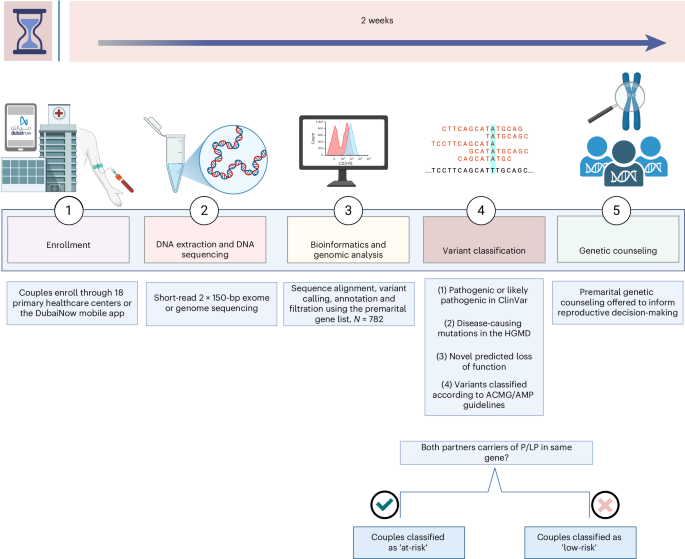
Genetic carrier screening examines selected genes or variants associated with inherited conditions. Depending on individual circumstances and local recommendations, screening may address thalassemia, sickle cell disease, and other inherited disorders.
A simplified example of autosomal recessive inheritance
When both partners carry relevant disease-causing variants in the same gene, the probability for each pregnancy is generally as follows:
These figures describe the usual inheritance pattern when both partners carry relevant variants for the same autosomal recessive condition. The actual interpretation depends on the condition, the variants identified, and the type of testing performed.
Carrier status does not automatically mean that a person is ill. If a potential reproductive risk is identified, genetic counselling can explain the results and discuss available options without making decisions on the couple's behalf.
3. Screening for Infections That May Have No Symptoms
Some infections can remain unnoticed because symptoms may be absent, mild, or nonspecific. Depending on national guidelines and personal circumstances, premarital screening may include testing for hepatitis B, hepatitis C, HIV, syphilis, or other relevant infections.
Identifying an infection can help people access appropriate medical care, understand transmission risks, and take measures to reduce the possibility of transmission to a partner or future child.
These tests should be treated as confidential medical examinations. They are not evidence of infidelity, personal failure, or incompatibility between partners.
4. Which Medical Tests May Be Recommended Before Marriage?
The appropriate screening panel varies by country, medical history, family history, and reproductive plans. A healthcare professional may recommend selected investigations such as:
- Complete blood count: Evaluates red blood cells, white blood cells, and platelets. Some findings may prompt additional investigations.
- Hemoglobin analysis: Helps identify certain hemoglobin variants and investigate possible inherited blood disorders, including thalassemia.
- Genetic carrier screening: Examines selected inherited variants when recommended by local protocols or indicated by individual risk factors.
- Infectious disease screening: Tests for particular infections according to applicable recommendations and circumstances.
- Blood group and Rh factor: Can provide useful information for future pregnancy care and maternal-fetal blood group assessment.
- Medical and family history: Helps determine whether further testing, vaccination review, or genetic counselling may be appropriate.
Not every individual needs every test. A routine blood count, for example, cannot detect every inherited condition, and a negative infection screen does not exclude every possible infection. The correct tests depend on the question being investigated.
5. What Happens When a Test Identifies a Potential Risk?
An abnormal result does not necessarily mean that a person has a confirmed condition or that a future child will be affected. The meaning depends on the specific finding and the accuracy and limitations of the test.
- Confirmatory testing may be needed to clarify an initial screening result.
- Testing the other partner may help assess a particular genetic risk.
- Genetic counselling can explain inheritance patterns and possible reproductive implications.
- Infections that require attention can be evaluated and managed by qualified healthcare professionals.
- Couples can discuss their options based on reliable information, individual preferences, and applicable medical guidance.
The objective of screening is to improve understanding, not to create fear. Knowledge of a potential risk can provide time to ask questions and consider next steps with appropriate professional support.
6. Why Family History Alone Is Not Always Enough
A common misconception is that genetic screening is unnecessary when no inherited condition has been reported in either family. However, recessive conditions may remain unrecognized across several generations because carriers often have no symptoms.
A family may therefore have no known affected relatives even when a relevant genetic variant is present. Screening can identify selected risks that a family history alone might not reveal.
Nevertheless, screening has limitations. A negative result reduces concern for the specific variants or conditions assessed but cannot guarantee that future children will have no genetic or congenital conditions.
7. How Premarital Screening Supports Future Family Planning
Medical information obtained before conception may help couples prepare for future decisions. Preconception care can include reviewing vaccination status, existing medical conditions, medication use, nutritional factors, and selected genetic or infectious risks.
When a relevant risk is identified, professional counselling can help couples understand possible next steps. Depending on the situation, these may include additional testing, medical management, or discussion of reproductive options.
Screening should be voluntary, confidential, and respectful of personal values. Results should be shared and interpreted in accordance with informed-consent requirements and applicable privacy rules.
Conclusion: Scientific Knowledge Before Marriage
Premarital medical tests can be valuable because certain biological risks are not always visible. A person may feel healthy while carrying a genetic variant or having an infection that requires attention.
Appropriate laboratory screening, clinical evaluation, and professional counselling can help couples understand selected risks and make informed decisions about future family planning.
The purpose is not to predict every possible outcome or judge a relationship. It is to provide reliable information that supports informed, responsible choices.
Frequently Asked Questions About Premarital Medical Tests
Are premarital medical tests necessary if both partners feel healthy?
They can still be useful because some genetic carrier states and infections may not cause noticeable symptoms. The recommended tests depend on local guidelines and individual circumstances.
Can premarital blood tests detect every genetic condition?
No. Routine blood tests identify selected findings, while other conditions require specialized genetic or laboratory testing. No screening panel detects every possible genetic variant.
Does being a genetic carrier mean that a person is ill?
Not necessarily. Many carriers of autosomal recessive conditions do not have the condition themselves. The reproductive implications depend on the specific gene and the other partner's results.
Do medical tests determine whether two people are compatible?
No. They provide selected medical information. They do not measure emotional compatibility, relationship quality, or the likelihood of a successful marriage.
Should a couple seek medical advice after receiving the results?
Yes. A qualified healthcare professional can explain the findings, recommend confirmatory testing when appropriate, and discuss further evaluation or counselling.
Scientific References and Further Reading
Medical disclaimer: This article is for educational purposes only and does not replace professional medical advice. Premarital screening requirements differ by country. Testing should follow applicable local guidance, informed-consent procedures, and qualified clinical interpretation.