CAR-T Cell Therapy vs Traditional Cancer Treatments | Cellular Immunotherapy
Explore CAR-T cell therapy vs traditional cancer treatments, engineered T cells, targeted antigen recognition, cellular immunotherapy advantages, and next-generation CAR-T research.
Discover how chimeric antigen receptor T-cell technology differs from conventional cancer treatment approaches, why engineered immune cells are attracting global research attention, and how cellular engineering is advancing precision immunotherapy.
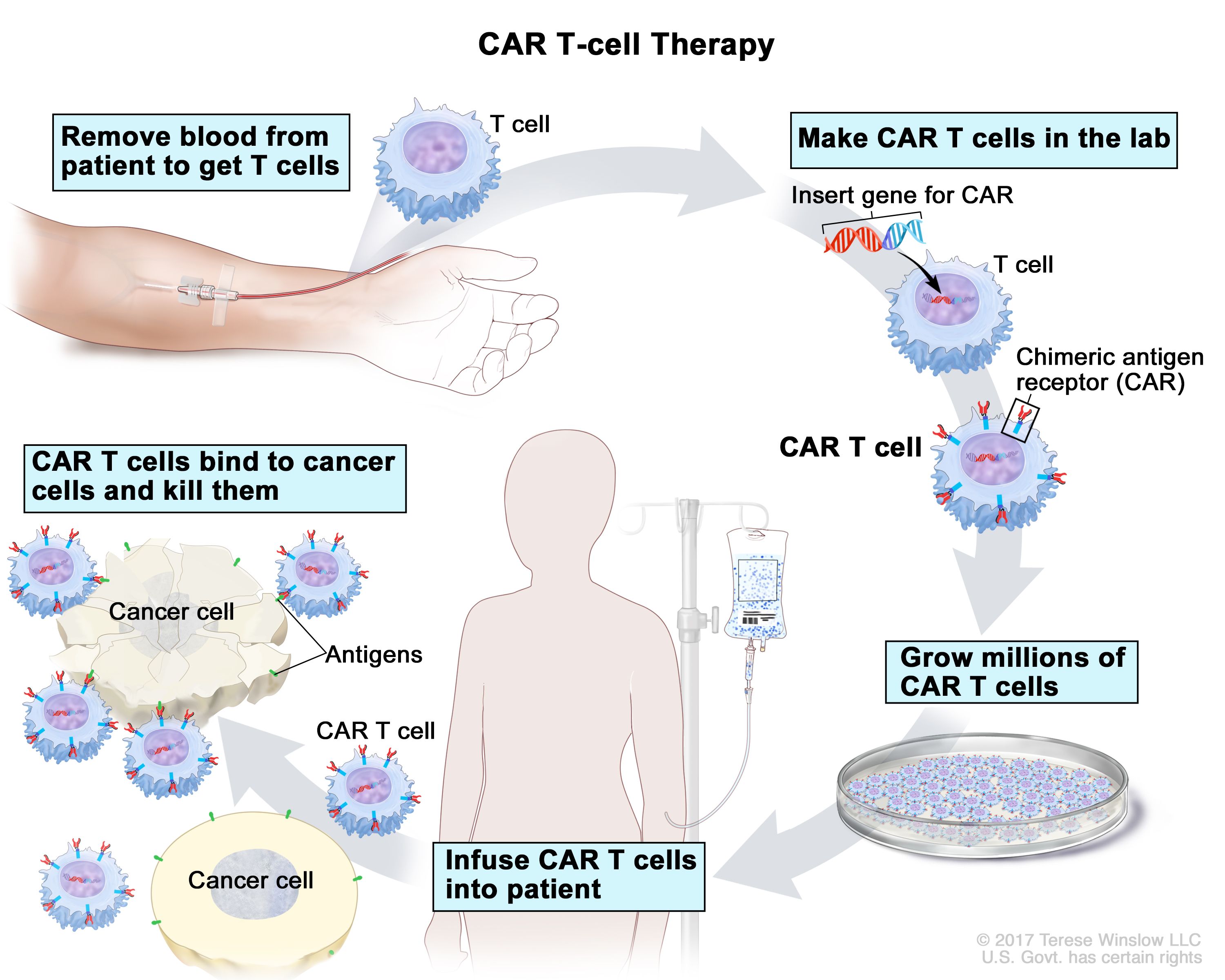
Scientific illustration of CAR-T cell engineering and target recognition. Image: National Cancer Institute.
A New Era of Precision Cellular Engineering
Cancer research has traditionally relied on several established treatment approaches, including chemotherapy, radiotherapy, surgery, targeted medicines, and conventional immunotherapies. These strategies have contributed significantly to oncology research and clinical practice.
However, advances in cellular engineering and molecular biology have introduced a different approach: CAR-T cell therapy. Rather than relying exclusively on external drugs or radiation, this technology involves genetically modifying T lymphocytes to express chimeric antigen receptors that recognize specific molecular targets.
CAR-T cell research combines genetic engineering, immune cell biology, molecular recognition, cell expansion, and advanced biomanufacturing. It has become an important field for researchers investigating antigen-specific cellular responses and next-generation immunotherapy platforms.
The fundamental difference: Traditional treatments generally act through pharmacological, chemical, or physical mechanisms. CAR-T technology modifies immune cells so that they can recognize selected antigens and initiate targeted cellular activity.
What Is CAR-T Cell Therapy?
CAR-T stands for Chimeric Antigen Receptor T-cell. CAR-T cells are T lymphocytes genetically engineered to express synthetic receptors that enable recognition of specific antigens.
These receptors combine extracellular antigen-binding components with intracellular signaling domains. When a CAR recognizes its target, the engineered T cell can activate signaling pathways that promote cellular responses.
CAR design is a major area of biotechnology research. Scientists investigate receptor structure, antigen-binding affinity, signaling components, co-stimulatory domains, cellular persistence, and functional activity.
CAR-T Cell Therapy vs. Traditional Cancer Treatment
The distinction between CAR-T cell therapy and conventional approaches is primarily based on their biological mechanisms, targeting strategies, and treatment formats.
| Feature | Traditional Treatment | CAR-T Cell Technology |
|---|---|---|
| Mechanism | Pharmacological, chemical, or physical cellular effects | Genetically engineered immune cell recognition |
| Targeting | Depends on the treatment modality | Designed around a selected antigen |
| Technology | Drugs, radiation, surgery, or antibodies | Genetic modification and cellular engineering |
| Administration | May involve repeated cycles or sessions | Cell collection, manufacturing, and infusion |
| Biological activity | Generally dependent on treatment exposure | Engineered cells may expand and persist |
| Personalization | Can be personalized according to multiple factors | Autologous products are manufactured from patient-derived cells |
| Research focus | Pharmacology, molecular pathways, and radiation biology | Antigen recognition, cell signaling, engineering, and persistence |
| Limitations | Varies by treatment; toxicity, resistance, and recurrence may occur | Antigen escape, cellular exhaustion, manufacturing complexity, and immune-related toxicity |
7 Potential Advantages of CAR-T Cell Technology
CAR-T cell therapy has introduced new possibilities in immune cell engineering. Its advantages are particularly relevant to research involving antigen-specific cellular responses and personalized cell manufacturing.
1. Antigen-Specific Recognition
CARs are designed to recognize selected surface antigens. This enables researchers to investigate targeted cellular recognition rather than relying exclusively on nonspecific cytotoxic mechanisms.
2. Genetic Engineering
CAR-T cells can be engineered with different receptor architectures, signaling domains, and molecular configurations to investigate cellular activation and functionality.
3. Personalized Cell Manufacturing
Autologous CAR-T platforms use patient-derived T cells, enabling individualized cellular manufacturing and supporting the development of personalized immunotherapy strategies.
4. Living Cellular Activity
Engineered T cells can expand following activation and may persist in the biological environment. This makes cellular persistence and immune memory important research topics.
5. Flexible CAR Design
Researchers can investigate receptor architecture, co-stimulatory domains, signaling pathways, and antigen-binding components to optimize experimental cellular systems.
6. Advanced Laboratory Research
CAR-T research integrates molecular biology, cell culture, gene transfer, flow cytometry, cell characterization, and functional assays within modern biotechnology laboratories.
7. Next-Generation Cell Platforms
New research explores multi-target CARs, universal CAR-T systems, armored CAR-T cells, alternative immune cell platforms, and strategies designed to improve cellular functionality.
8. Precision Immunology
CAR-T platforms support investigation of antigen expression, immune activation, tumor microenvironment interactions, and cellular responses at molecular and functional levels.
How CAR-T Cells Are Developed
CAR-T manufacturing involves several specialized stages. The process requires controlled cell collection, genetic modification, cell expansion, product characterization, and administration.

T-Cell Collection
Immune cells are collected and isolated for cellular manufacturing.
Genetic Modification
Cells are engineered to express a chimeric antigen receptor.
Cell Expansion
Engineered cells are expanded to produce the required cellular product.
Characterization
Cell identity, viability, quality, and functional properties are evaluated.
Cell Infusion
The final cell product is administered according to the relevant protocol.
CAR-T Cell Research: Current Challenges and Future Directions
Solid Tumor Research
While CAR-T cell therapy has demonstrated important clinical progress in selected hematological malignancies, solid tumors present additional biological challenges.
Research focuses on antigen heterogeneity, tumor microenvironment interactions, cellular trafficking, immune suppression, and target selection.
Next-Generation CAR Design
Advanced CAR engineering investigates multi-antigen targeting, optimized receptor signaling, controllable activation, and new approaches to cellular functionality.
Research challenges: CAR-T development continues to investigate cytokine release syndrome, immune effector cell-associated neurotoxicity, antigen escape, cellular exhaustion, manufacturing variability, and challenges associated with solid tumor targeting.
Essential Research Areas Supporting CAR-T Development
CAR-T research depends on a multidisciplinary laboratory ecosystem combining cellular biology, genetic engineering, molecular analysis, and functional characterization.
Cell Culture & Cell Expansion
Cell culture media, supplements, growth factors, and specialized reagents support controlled cellular growth and experimental workflows.
Gene Expression & Molecular Biology
Molecular biology reagents, nucleic acid analysis, genetic constructs, and gene expression research support the characterization of engineered cellular systems.
Flow Cytometry & Cell Characterization
Antibodies, fluorescent reagents, cell analysis tools, and immunophenotyping assays enable investigation of cellular identity and functional characteristics.
Immunology Research
Cytokine analysis, immune cell assays, antigen research, and immunological reagents support investigations into cellular activation and immune signaling.
CAR-T Cell Therapy vs. Traditional Treatment: FAQs
Is CAR-T cell therapy better than chemotherapy?
CAR-T cell therapy and chemotherapy have different mechanisms and applications. CAR-T has produced significant results in selected blood cancers, particularly in certain relapsed or refractory settings. Chemotherapy remains an important treatment option across many cancer types. The most appropriate approach depends on disease characteristics, clinical evidence, and individual circumstances.
What makes CAR-T cell therapy different from traditional immunotherapy?
CAR-T therapy involves genetically engineering T cells to express synthetic antigen receptors. Other immunotherapies may involve checkpoint inhibitors, antibodies, cytokines, or different immune-modulating approaches without necessarily modifying T cells genetically.
Why is CAR-T cell therapy considered personalized medicine?
Autologous CAR-T products are manufactured using cells collected from the individual patient. The cellular product is genetically modified and expanded before being returned to that patient.
Can CAR-T cells target solid tumors?
Researchers are investigating CAR-T strategies for solid tumors. Challenges include antigen heterogeneity, tumor microenvironment suppression, limited cellular trafficking, and target specificity.
What is the future of CAR-T cell research?
Future research includes multi-target CARs, universal cell therapies, alternative immune cell platforms, improved manufacturing methods, enhanced cellular persistence, and new approaches to solid tumor targeting.
From Conventional Treatments to Engineered Immune Cells
CAR-T cell technology represents an important evolution in cellular immunotherapy. By combining genetic engineering, molecular recognition, and living immune cells, researchers are developing increasingly sophisticated platforms for studying targeted cellular responses.
Although CAR-T cell therapy is not a universal replacement for chemotherapy, radiation, or other treatment approaches, its success in selected hematological malignancies has established it as a major area of biotechnology research.
Continued research into receptor design, antigen targeting, cellular persistence, immune signaling, and next-generation manufacturing technologies may further expand the potential applications of engineered immune cells.
Explore Cellular Immunotherapy Research
Discover research reagents, cell culture products, molecular biology tools, immunology assays, and biotechnology resources supporting advanced cellular and molecular research.
Explore CAR-T Research Products