Cancer Immunotherapy Research
Explore cancer immunotherapy research, immune checkpoint inhibitors, CAR-T cell therapy, tumor immunology, biomarkers and immuno-oncology advances.
 Immuno-Oncology · Cancer Research
Cancer Immunotherapy: How the Immune System Is Transforming Oncology Research
Cancer immunotherapy has become one of the most important areas of modern oncology research. By investigating how the immune system recognizes, responds to and sometimes fails to eliminate tumor cells, scientists are developing new strategies to understand cancer biology and strengthen antitumor immune responses. From immune checkpoint inhibitors to engineered T cells and cancer vaccines, immuno-oncology combines immunology, molecular biology, cellular engineering and computational research to investigate complex interactions between tumors and the immune system.
Unlike approaches that focus exclusively on the tumor itself, cancer immunotherapy research also examines the immune cells, molecular signals and surrounding tissue that influence antitumor activity. Understanding these relationships is essential for studying why some tumors are recognized by immune cells while others develop mechanisms that allow them to evade immune surveillance.
1. What Is Cancer Immunotherapy?
Cancer immunotherapy refers to approaches that use or modify the immune system to recognize and act against cancer. The immune system naturally identifies many abnormal cells, but tumors can develop molecular and cellular mechanisms that reduce immune recognition or suppress immune-cell activity.
Tumor cells may alter the expression of antigens, activate inhibitory immune pathways or influence surrounding cells to create an immunosuppressive tumor microenvironment. These processes can limit the ability of immune cells to mount an effective response.
Immuno-oncology research investigates how these mechanisms operate and how they might be modified. Researchers study immune-cell activation, antigen presentation, cytokine signaling, tumor infiltration and interactions between malignant cells and the surrounding immune environment.
2. Major Types of Cancer Immunotherapy
Immune Checkpoint Inhibitors
These approaches block inhibitory pathways such as PD-1/PD-L1 or CTLA-4. By interrupting specific immune-regulatory signals, checkpoint inhibitors can help restore T-cell activity against tumors in appropriate biological settings.
CAR-T Cell Therapy
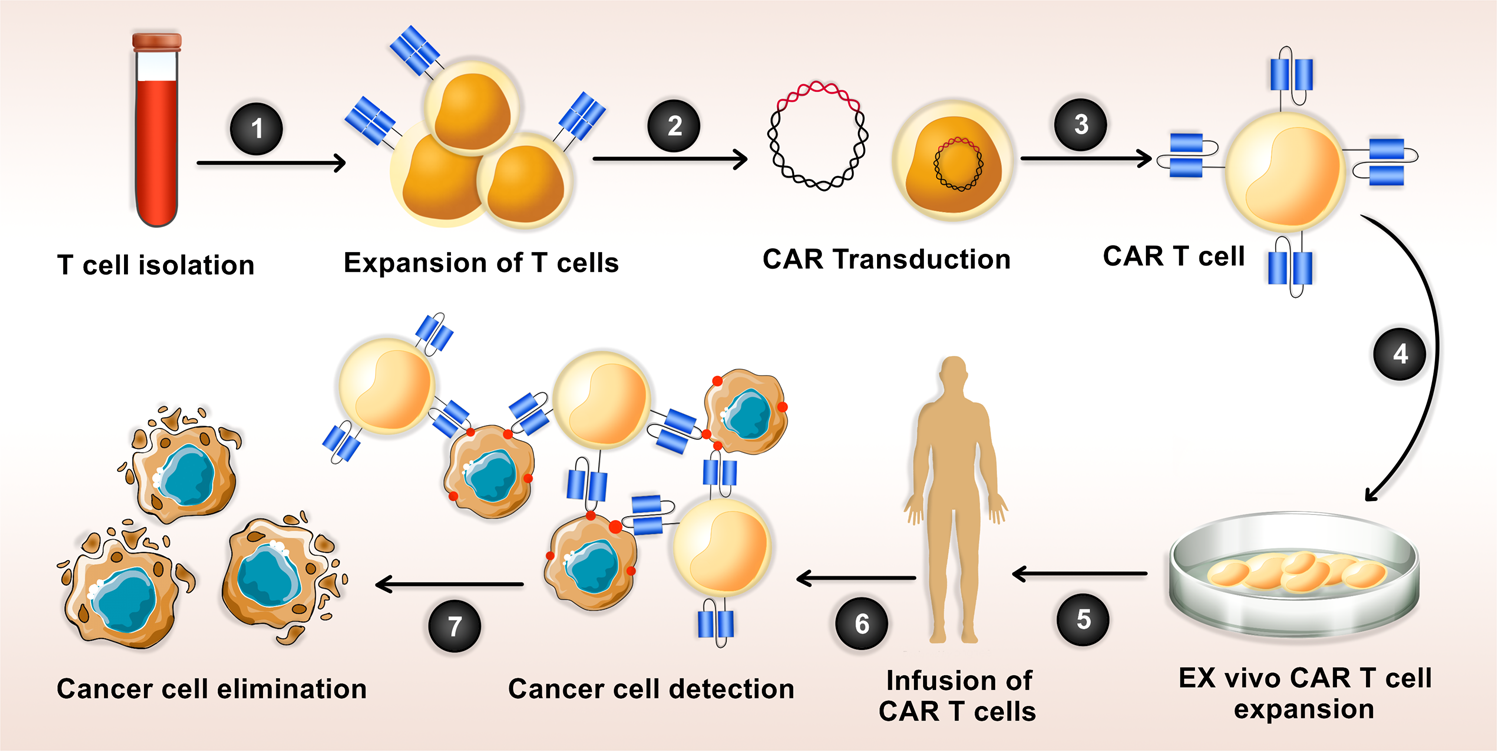
Chimeric antigen receptor T-cell approaches involve engineering T cells to recognize selected antigens. Research investigates antigen recognition, cell persistence, functional activity and the challenges of applying engineered cells to solid tumors.
Tumor-Infiltrating Lymphocytes
Tumor-infiltrating lymphocytes, or TILs, are immune cells found within tumor tissue. Researchers investigate their specificity, functional state and potential use in adoptive cell approaches.
Cancer Vaccines
Cancer vaccine research explores ways to expose the immune system to selected tumor-associated antigens. Platforms include peptide, nucleic-acid and other antigen-delivery approaches.
Cytokines and Immune Signaling
Cytokines are signaling molecules that regulate immune-cell communication and activity. Research examines how these pathways influence immune responses, inflammation and tumor biology.
Bispecific Antibodies and T-Cell Engagers
These molecular approaches can connect immune cells with selected target cells. Researchers investigate binding specificity, immune-cell activation and the factors that influence efficacy and safety.
3. Immune Checkpoint Inhibitors: Understanding PD-1, PD-L1 and CTLA-4
Immune checkpoints are regulatory pathways that help control the intensity and duration of immune responses. They are important for maintaining immune balance, but tumors can exploit some of these mechanisms to reduce immune-cell activity.
The PD-1 receptor is expressed by certain immune cells, including activated T cells. Its interaction with PD-L1 can inhibit aspects of T-cell activity. Some tumors and cells within the tumor microenvironment express PD-L1, creating conditions that can contribute to immune suppression.
CTLA-4 is another immune-regulatory receptor involved in controlling T-cell activation. Although PD-1/PD-L1 and CTLA-4 are both checkpoint pathways, they have different biological roles and cannot be treated as interchangeable targets.
Research into checkpoint inhibition examines receptor expression, signaling pathways, immune-cell states and the biological context in which these pathways operate. Biomarkers such as PD-L1 expression can provide useful information in selected settings, but no single marker predicts every response.
4. CAR-T Cell Research: Engineering Immune Recognition
CAR-T cell technology involves modifying T cells to express a chimeric antigen receptor designed to recognize a selected target. The receptor provides a mechanism for recognizing an antigen on target cells and initiating cellular activation.
A typical CAR design contains an antigen-recognition domain, a structural region, a transmembrane component and intracellular signaling domains. The exact design can influence receptor expression, signaling strength, cell persistence and functional behavior.
CAR-T cell research has produced important advances, particularly in selected blood cancers. Extending these approaches to solid tumors remains challenging because target antigens may be heterogeneous, tumor environments can suppress immune activity and engineered cells may have difficulty reaching or persisting within tumor tissue.
Current research therefore examines antigen selection, receptor architecture, T-cell exhaustion, metabolic constraints and interactions with the tumor microenvironment. Preclinical evaluation and carefully designed clinical studies are essential for determining the relevance of new engineering strategies.
5. The Tumor Microenvironment and Immune Evasion
The tumor microenvironment includes malignant cells, immune cells, stromal cells, extracellular matrix components and signaling molecules surrounding a tumor. These components interact continuously and can influence tumor growth, immune-cell recruitment and local immune activity.
Some tumors contain immune cells that recognize tumor-associated antigens, while other tumors exhibit limited immune-cell infiltration or a strongly suppressive local environment. Even within one tumor, different regions can show distinct cellular compositions and immune activity.
Regulatory T Cells and Immune Suppression
Regulatory T cells help maintain immune tolerance and limit excessive immune responses. Within tumors, some regulatory populations can suppress antitumor immune activity. Understanding their localization, function and interactions with other immune cells is an important research focus.
Myeloid Cells and Tumor-Associated Macrophages
Myeloid cells, including macrophages, can adopt different functional states depending on local signals. Their activities may influence antigen presentation, inflammation, tissue remodeling and T-cell function. Researchers study these populations to better understand the complex immune environment surrounding tumors.
Antigen Presentation and T-Cell Recognition
Immune recognition depends on the presentation of antigens and the ability of immune cells to detect relevant signals. Alterations in antigen processing, presentation or tumor-cell characteristics may contribute to immune evasion and variable responses.
6. Biomarkers in Cancer Immunotherapy Research
Biomarkers can help researchers characterize tumor-immune interactions and investigate factors associated with response or resistance. They may reflect tumor genetics, immune-cell abundance, protein expression or broader molecular signatures.
- PD-L1 expression: Examines a checkpoint-related protein using validated methods in relevant research or clinical contexts.
- Tumor mutational burden: Estimates the number of selected mutations within a tumor's analyzed genomic regions.
- Microsatellite instability and mismatch repair: Characterize specific forms of genomic instability that can have relevance to immune response in selected tumor settings.
- T-cell infiltration: Measures the presence and distribution of immune cells within or around tumor tissue.
- Gene expression signatures: Investigate patterns associated with immune activation, interferon signaling or immunosuppressive pathways.
These biomarkers have different strengths and limitations. Their interpretation depends on the assay, tumor context, sampling strategy and evidence supporting the intended use. Researchers often investigate combinations of markers rather than relying on one measurement alone.
7. How AI and Multi-Omics Are Advancing Immuno-Oncology
Modern immunotherapy research increasingly combines genomic, transcriptomic, proteomic and cellular measurements. These data can help scientists examine how tumor mutations, gene expression, immune-cell states and signaling pathways interact.
Single-cell RNA sequencing can reveal diverse immune-cell populations and differences in their transcriptional states. Spatial transcriptomics adds information about where these populations are located in tumor tissue. Proteomics and other molecular assays can provide complementary information about protein abundance and immune signaling.
Artificial intelligence and machine learning can support the analysis of these high-dimensional datasets. Researchers use computational methods to investigate immune-cell populations, identify candidate biomarkers, integrate molecular features and prioritize hypotheses for further testing.
However, computational associations are not proof of causation. Model performance must be evaluated using appropriate controls, independent datasets and experimental validation. Careful study design is especially important when data are limited or when results may be influenced by technical differences between samples.
8. Challenges and Future Directions in Cancer Immunotherapy
Despite major scientific progress, cancer immunotherapy does not produce the same response in every tumor or every patient. Several biological and technical challenges continue to drive research.
- Primary and acquired resistance: Tumors may fail to respond initially or develop mechanisms that reduce response over time.
- Tumor heterogeneity: Differences between cancer cells can complicate target selection and immune recognition.
- Immune-related toxicity: Immune activation can affect healthy tissues, making safety evaluation essential.
- Solid tumor barriers: Physical, metabolic and immunosuppressive conditions may limit immune-cell access and activity.
- Biomarker limitations: Existing markers do not capture every mechanism that influences immune response.
- Manufacturing and reproducibility: Cell-based approaches require robust production, quality assessment and standardized evaluation.
Future research is investigating combination approaches, improved cell engineering, personalized cancer vaccines, new immune targets and more informative biomarkers. Progress will depend on connecting mechanistic laboratory studies with reproducible evidence and carefully designed clinical research.
Frequently Asked Questions About Cancer Immunotherapy
What is cancer immunotherapy?
Cancer immunotherapy uses or modifies immune mechanisms to help recognize and act against cancer. Approaches include checkpoint inhibitors, engineered immune cells, cancer vaccines and other immune-modulating strategies.
What is the difference between immunotherapy and CAR-T cell therapy?
Immunotherapy is the broad field of approaches involving the immune system. CAR-T cell therapy is one specific form in which T cells are engineered to recognize selected target antigens.
How do immune checkpoint inhibitors work?
They block selected inhibitory immune pathways, such as PD-1/PD-L1 or CTLA-4, allowing immune activity to increase in appropriate biological settings.
Why does immunotherapy not work for every tumor?
Response can depend on tumor genetics, antigen presentation, immune-cell infiltration, suppressive signals, tumor heterogeneity and other biological factors. Researchers continue to investigate these mechanisms and ways to improve response prediction.
What is the role of biomarkers in immuno-oncology?
Biomarkers help researchers characterize tumor and immune features and investigate relationships with treatment response. Their usefulness depends on the specific marker, validated measurement method and clinical or research context.
Scientific References and Further Reading
- National Cancer Institute — Immunotherapy to Treat Cancer
- National Cancer Institute — Immune Checkpoint Inhibitors
- National Cancer Institute — T-Cell Transfer Therapy
- Society for Immunotherapy of Cancer — Review of Cancer Immune Responsiveness and Immunotherapy Research
- Nature Reviews Cancer — Regulatory T Cells in the Tumor Microenvironment
Explore Resources for Immunology and Cancer Research
Discover scientific products and research services that support molecular biology, immunology, biomarker analysis and advanced laboratory workflows.
Explore Gentaur Research Services →